
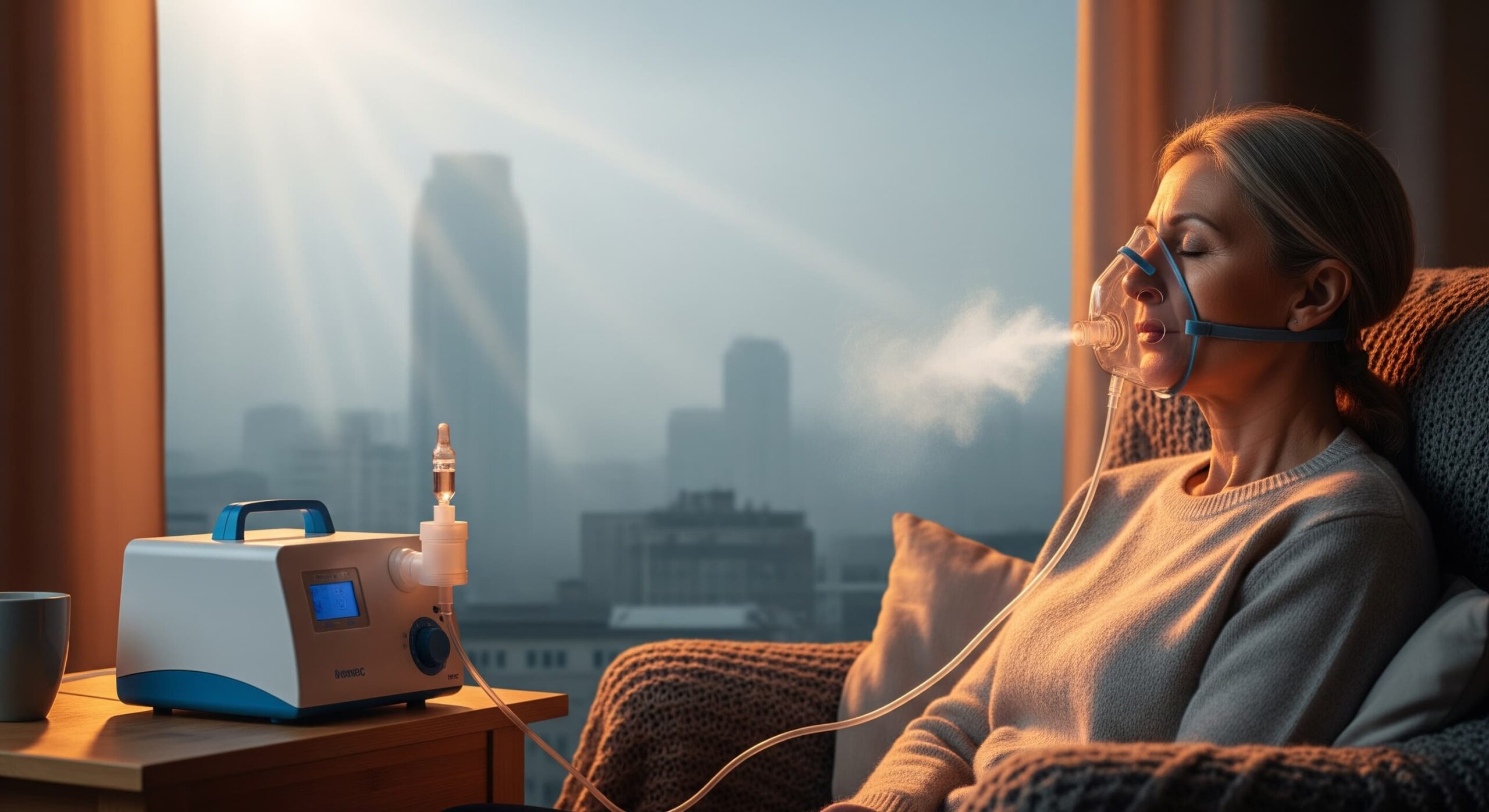
Air pollution isn’t just something we see outside our windows — it’s something we breathe in every single day. From car exhausts to construction dust, every invisible particle we inhale puts extra pressure on our lungs. And while masks, purifiers, and apps help us track the Air Quality Index, sometimes what our body really needs is a bit of direct help to breathe easier.
That’s where a nebulizer quietly steps in.
Understanding the Nebulizer: A Simple Tool with Big Impact
Let’s start simple — a nebulizer is a small medical device that turns liquid medicine into a fine mist so you can inhale it easily. Think of it as a shortcut for your lungs — delivering medication straight where it’s needed, without the struggle of deep inhaling or perfect timing (which inhalers usually require).
It’s especially handy for:
- Children or older adults who can’t use inhalers properly
- People with asthma, COPD, or bronchitis
- Anyone living in areas where air pollution or smog is a daily problem
In short, a nebulizer isn’t just for “sick days.” It can be part of a regular routine to keep your airways clear and your breathing smooth when the air outside isn’t cooperating.
Air Pollution and Your Lungs: The Invisible Strain
When we talk about pollution, most people think of coughing or watery eyes. But the reality runs deeper. Tiny particles — especially PM2.5 and PM10 — go straight into our lungs and cause inflammation. Over time, this can trigger:
- Asthma attacks
- Chronic coughs
- Reduced lung capacity
- Increased risk of heart problems and fatigue
It’s even more harmful for children, older adults, and people with pre-existing respiratory issues.
In such cases, even short exposure to polluted air can make breathing feel like a chore.
How a Nebulizer Helps Against Pollution’s Effects
When air pollution flares up, our airways become irritated and clogged. Here’s how a nebulizer makes things easier:
- Delivers Soothing Moisture – Nebulized saline helps loosen mucus, relieve dryness, and calm irritated airways.
- Provides Faster Relief – The medicine directly reaches your lungs, acting quicker than tablets or syrups.
- Easier to Use – You can sit, relax, and breathe normally while it does its work.
- Ideal for Vulnerable Groups – For kids, elderly individuals, and people with weak lungs, it’s a gentle and effective option.
Simply put, while we can’t control the air outside, we can control how we protect our lungs inside.
When Should You Use a Nebulizer?
Here are a few situations when using a nebulizer can make a noticeable difference:
- You’re feeling breathless or wheezy after exposure to smog or dust
- Your cough feels deeper and more persistent than usual
- You have a diagnosed respiratory condition that worsens during pollution spikes
- You live in a city where AQI often hits the “poor” or “very poor” range
If any of these sound familiar, it’s a sign your lungs might appreciate some extra help.
Getting the Best Out of Your Nebulizer
A nebulizer is only as effective as how well you use and care for it. Here are a few easy tips:
- Use it in a clean room — Avoid running it in a dusty or poorly ventilated space.
- Sit upright and breathe normally — You don’t need to force deep breaths; the mist does the work.
- Keep it clean — Wash the mouthpiece or mask after every use and disinfect weekly to prevent infections.
- Follow your doctor’s guidance — Only use prescribed medications or saline; don’t experiment.
- Monitor your symptoms — If your breathing doesn’t improve or worsens, reach out to your doctor.
A well-maintained nebulizer can last for years — becoming your reliable companion through allergy seasons and pollution spikes alike.
Myth vs. Fact: Clearing the Air About Nebulizers
Myth 1: “Nebulizers are only for severe patients.”
Fact: They’re great for preventive use too — especially during high-pollution days to ease mild symptoms.
Myth 2: “Inhalers and nebulizers do the same thing.”
Fact: Both deliver medicine, but nebulizers don’t require timing or deep inhalation, making them more accessible for certain users.
Myth 3: “They’re complicated to use.”
Fact: A nebulizer is one of the easiest respiratory aids to operate — plug it in, fill the medicine cup, and breathe.
Simple Steps Beyond the Nebulizer
While nebulizers help manage symptoms, they’re part of a bigger lifestyle approach:
- Track the AQI daily
- Wear N95 or N99 masks outdoors
- Use air purifiers indoors
- Keep windows shut during peak traffic hours
- Grow air-purifying plants like snake plants or peace lilies
Your lungs deserve protection from every angle — not just when symptoms appear.
Conclusion: Breathing Better, Living Smarter
We can’t change the air overnight, but we can change how our bodies handle it.
A nebulizer is more than just a device; it’s a reminder that every breath matters. It gives our lungs the relief they need to recover from what pollution takes away.So, the next time the city feels hazy and your breathing feels heavy, don’t ignore it.
Take a pause.
Let your nebulizer do the work.
Because clean breathing isn’t just a luxury — it’s your right, and your first step towards healthier living.